The Science Behind Lymphatic Drainage Massage: What Actually Happens in Your Body
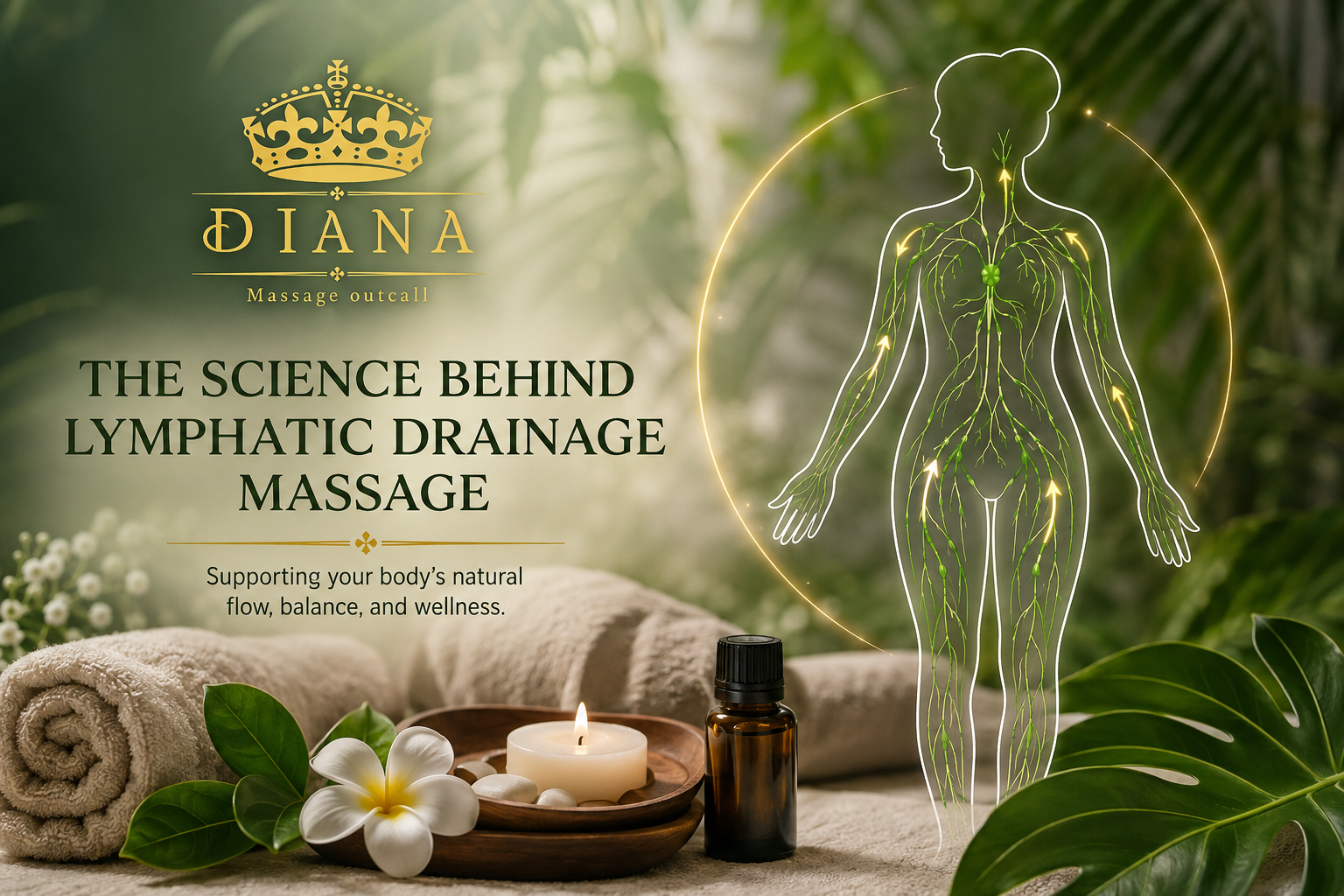
Science Behind Lymphatic drainage massage becomes especially interesting when you notice persistent puffiness, a feeling of heaviness, or swelling that does not seem to improve with ordinary massage. Many people in Bali come looking for a solution because they feel uncomfortable in their body, especially after long flights, extended periods of sitting, intense exercise, or several days of poor sleep.
Why Understanding the Science Behind Lymphatic Drainage Matters
At Diana Aprilia Spa, clients often ask a practical question before booking a session: does lymphatic massage actually do something different from a normal massage? The answer starts with understanding how lymph fluid moves, why gentle pressure matters, and what a properly performed session is designed to achieve.
The Science Behind Lymphatic drainage is not about forcing fluid through the body. The lymphatic system already has its own natural movement mechanisms. A skilled practitioner works with those mechanisms rather than trying to create aggressive pressure.
This is one of the biggest differences between lymphatic drainage and conventional massage. Deep tissue massage generally focuses on muscles, fascia, tension, and areas of physical tightness. Lymphatic techniques use much lighter, rhythmic movements directed toward areas where lymph can continue its natural pathway.
For someone searching for Lymphatic Massage Bali, this distinction is important. A treatment should not simply feel like a lighter version of a regular massage. The technique, pressure, sequence, and treatment goals are different.
The Science Behind Lymphatic Drainage Starts With Your Lymphatic System
The Science Behind Lymphatic massage begins with understanding what the lymphatic system actually does inside the body.
Your lymphatic system is a network involving lymphatic vessels, lymph nodes, lymphatic tissues, and organs. One of its important functions is helping maintain fluid balance between tissues and the circulation. It also plays an important role in immune function.
Unlike the heart, which provides a powerful central pump for blood circulation, the lymphatic system depends on several mechanisms to move lymph. Body movement, muscle contractions, pressure changes during breathing, and the activity of lymphatic vessels all contribute to lymph movement.
This explains why movement and breathing are often discussed alongside lymphatic health.
When you remain seated for hours during a flight to Bali, for example, your muscles are not contracting as frequently as they would while walking. Some people subsequently notice temporary swelling or puffiness, particularly around the ankles and feet.
That does not automatically mean there is a medical lymphatic disorder. Temporary fluid accumulation can happen for many reasons.
The practical lesson is that lymphatic massage should be viewed as a supportive wellness technique rather than a magic solution for every form of swelling.
How Lymphatic Drainage Massage Is Different From Regular Massage
One of the clearest ways to understand the Science Behind Lymphatic techniques is to compare them with conventional massage.
Traditional massage often uses kneading, compression, friction, stretching, or deeper pressure. These techniques can be useful when the primary concern is muscle tension or soreness.
Manual lymphatic drainage uses a different approach. The movements are generally gentle, controlled, rhythmic, and performed with attention to the direction of lymphatic flow.
A good session may feel surprisingly light.
This sometimes creates confusion for first time clients. They expect a strong massage because they associate more pressure with better results. In lymphatic work, that assumption can be misleading.
More pressure does not automatically mean better lymphatic stimulation.
The Science Behind Lymphatic massage is closely connected to the superficial location of many lymphatic vessels. Because these structures are located relatively close to the skin, excessive pressure is not necessarily required.
This is why technique matters more than intensity.
What Happens During a Lymphatic Massage Session?
The Science Behind Lymphatic drainage becomes easier to understand when you experience how a session is actually structured.
A practitioner may begin with an assessment of the areas you want to address and your general wellness situation. The session can then progress through gentle movements designed to encourage fluid movement along appropriate lymphatic pathways.
The exact sequence depends on the technique being used and the client’s needs.
For a wellness focused session, common areas may include the neck, shoulders, abdomen, arms, legs, and other areas where clients commonly experience a feeling of puffiness or heaviness.
The objective is not to squeeze fluid out of the body.
Instead, the practitioner uses carefully controlled movements intended to support lymphatic circulation and encourage fluid movement.
This is where Lymphatic Massage differs significantly from treatments that promise immediate detoxification or dramatic body transformation.
The Role of Gentle Pressure in Lymphatic Massage
The Science Behind Lymphatic techniques helps explain why gentle pressure can be appropriate.
Lymphatic vessels contain structures that help regulate the movement of lymph. Manual techniques are designed to interact with superficial tissues rather than aggressively compressing deeper muscles.
During a professional session, you may notice repetitive movements that appear simple.
From a practical perspective, simplicity does not mean lack of technique.
A practitioner needs to understand direction, sequence, pressure, rhythm, anatomy, and how the client’s tissues respond. Randomly copying a few light strokes from a video is not equivalent to understanding the technique.
This is one reason choosing an experienced Lymphatic Massage Bali provider can make a meaningful difference in your experience.
What Benefits Can You Reasonably Expect?
When discussing the Science Behind Lymphatic, it is important to separate realistic expectations from exaggerated marketing.
Some people seek lymphatic massage because they want to feel less puffy. Others want a relaxing wellness treatment after travel, exercise, or periods of prolonged sitting.
Clients may report that their body feels lighter or less congested after a session. Some also notice temporary changes in visible puffiness.
However, these experiences should not be confused with claims that lymphatic massage permanently removes toxins, causes significant fat loss, or replaces medical treatment.
Current evidence is strongest in specific clinical contexts, particularly as part of care for certain types of lymphoedema. Research findings are not consistent enough to support every wellness claim commonly associated with lymphatic massage.
For general wellness clients, the most responsible approach is to focus on how the treatment feels and what it is realistically designed to support.
Can Lymphatic Massage Help With Swelling?
The Science Behind Lymphatic drainage is particularly relevant when discussing swelling.
Swelling can have many different causes. It can be associated with prolonged sitting, injury, inflammation, venous problems, medication, hormonal changes, or medical conditions.
That means not every swollen area should automatically be treated with massage.
For diagnosed lymphoedema, manual lymphatic drainage can be used as part of a broader management approach. Research has found mixed results regarding how much additional benefit manual lymphatic drainage provides in different treatment situations.
This is an important point for consumers.
A professional practitioner should not promise that one massage will permanently eliminate swelling.
Instead, the practitioner should recognize when a wellness massage is appropriate and when a client should seek assessment from a qualified medical professional.
The Connection Between Movement, Breathing, and Lymphatic Flow
Another important part of the Science Behind Lymphatic function is movement.
Your body is not designed to remain completely still for long periods. Walking, changing positions, contracting muscles, and normal breathing all contribute to physiological processes that support circulation and fluid movement.
This is why a good wellness routine should not depend entirely on massage.
If you are visiting Bali and spending long hours in a car, airplane, villa, or hotel room, simple movement can be valuable. Taking short walks, changing positions, staying adequately hydrated, and avoiding unnecessarily long periods of inactivity can complement a wellness focused massage routine.
Lymphatic massage should support healthy habits rather than replace them.
What the Research Actually Says About Lymphatic Massage
The Science Behind Lymphatic drainage should be discussed honestly because this is where many online articles become misleading.
Systematic reviews have found conflicting evidence regarding manual lymphatic drainage for lymphoedema. Some studies report improvements in symptoms, volume, or pain, while others find limited additional benefit when manual lymphatic drainage is combined with other components of comprehensive treatment.
A meta analysis involving breast cancer related lymphoedema found significant improvement in pain but did not find statistically significant improvements in some measures of limb volume or quality of life.
Other research has suggested that manual lymphatic drainage may contribute to improvements in swelling and symptoms in selected rehabilitation situations, although researchers continue to call for stronger studies.
For consumers, the message is simple.
There is a scientific basis for manual lymphatic drainage as a therapeutic technique, but the evidence does not justify every claim found in online wellness advertising.
That distinction is exactly what makes a trustworthy Lymphatic Massage Bali service different from a generic massage advertisement.
What About Detox Claims?
One of the most common questions surrounding the Science Behind Lymphatic massage is whether the treatment detoxifies the body.
This claim requires careful explanation.
Your body already has organs and physiological systems responsible for processing and eliminating metabolic waste. The lymphatic system has important roles in fluid balance and immune function, but it should not be presented as a simple waste disposal system that can be manually flushed.
Recent medical commentary has specifically highlighted the lack of substantial scientific evidence supporting popular claims that lymphatic drainage massage provides detoxification, immunity boosting, or weight loss for otherwise healthy people.
A better way to describe a wellness session is that it may support relaxation and the normal movement of tissue fluid while providing a calming bodywork experience.
That is both more accurate and more useful.
Can Lymphatic Massage Make You Lose Weight?
The Science Behind Lymphatic massage also needs to be separated from weight loss marketing.
A temporary change on a scale after massage does not necessarily represent fat loss.
Changes in body water can occur for many reasons. If someone looks less puffy after a session, that does not mean the massage has burned body fat.
For people whose goal is sustainable weight management, nutrition, physical activity, sleep, and long term lifestyle habits are much more relevant.
Lymphatic massage can be part of a wellness routine, but it should not be sold as a substitute for those foundations.
Practical Experience: What Clients Usually Notice
From a practical treatment perspective, one of the most common observations is that clients are surprised by how different lymphatic massage feels from deep tissue massage.
Someone who arrives expecting strong pressure may initially wonder whether the treatment is doing enough.
After the session, however, the feedback is often about comfort rather than intensity. Clients may describe feeling relaxed, lighter, less tense, or more comfortable moving around.
These experiences are subjective and should not be presented as medical outcomes.
The most useful approach is to ask what the client is actually trying to achieve.
If the goal is relaxation after travel, the treatment can be approached as a calming wellness experience.
If the goal involves persistent or unexplained swelling, the conversation should be more cautious because the underlying cause needs to be understood.
A Practical Bali Example
Imagine a visitor arriving in Bali after a long international flight.
They spend several hours sitting, arrive at their hotel, eat dinner, sleep, and wake up feeling that their feet and legs look slightly puffy.
In that situation, the first step should not be to assume there is a lymphatic disease.
Movement, normal hydration, rest, and observing whether the swelling resolves can be sensible first considerations.
A gentle Lymphatic Massage session may then be chosen as part of a relaxing wellness experience.
However, if swelling is severe, persistent, painful, associated with redness or warmth, occurs suddenly, or comes with other concerning symptoms, medical evaluation is more appropriate than booking a massage.
That distinction protects the client and reflects responsible professional practice.
When Should You Avoid Lymphatic Massage?
Understanding the Science Behind Lymphatic massage also means knowing when massage is not the right answer.
People with unexplained swelling should be cautious.
Anyone with a serious medical condition, an active infection, acute inflammation, suspected blood clot, significant heart or kidney problems, or other medical concerns should obtain appropriate medical advice before receiving lymphatic massage.
The same principle applies after surgery.
Postoperative lymphatic treatments can be appropriate in selected circumstances, but timing and technique should follow the advice of the relevant medical professional.
A responsible massage provider should never encourage a client to ignore medical symptoms simply because they want a spa treatment.
How to Choose the Right Lymphatic Massage in Bali
If you are searching for Lymphatic Massage Bali, do not choose a provider based only on attractive photographs or promises of instant results.
Look for a service that clearly explains its technique.
Ask whether the practitioner understands lymphatic massage rather than simply offering a light pressure massage.
Check whether the service asks about your health situation before treatment.
Pay attention to how the provider describes benefits. Responsible language is usually more credible than claims involving instant detoxification, guaranteed weight loss, or permanent swelling removal.
You should also consider whether the treatment environment feels professional, hygienic, comfortable, and respectful of your privacy.
For visitors, a Lymphatic Massage Bali service that can come to your accommodation may also be convenient, especially after a long journey or during a relaxing wellness day.
Practical Tips Before Your Lymphatic Massage
The Science Behind Lymphatic massage becomes more useful when you know how to prepare.
Drink Normally
Arrive normally hydrated rather than intentionally drinking excessive amounts of water immediately before treatment.
Hydration is part of general wellness, but more water is not automatically better.
Avoid Arriving Immediately After a Heavy Meal
Give your body enough time to feel comfortable before lying down for treatment.
A light meal earlier in the day may be more comfortable than arriving immediately after a very large meal.
Communicate Your Goals
Tell your practitioner why you booked the treatment.
Whether your concern is travel related puffiness, general relaxation, body comfort, or simply curiosity about lymphatic massage, this information helps create a more appropriate session.
Tell the Practitioner About Relevant Health Issues
Do not hide important health information.
If you have recently had surgery, are taking medication, have unexplained swelling, or have a diagnosed condition, discuss it before treatment and follow medical advice where necessary.
Do Not Judge Quality by Pressure
This may be the most important practical tip.
A treatment does not have to hurt to be effective.
In lymphatic techniques, gentle and controlled work is part of the method.
How Often Should You Get Lymphatic Massage?
There is no universal schedule that works for everyone.
The Science Behind Lymphatic treatment depends on the reason for treatment, your health situation, your response to sessions, and whether you are receiving massage for general wellness or as part of clinical care.
For a healthy person booking a relaxing wellness treatment, frequency can be based on personal preference and lifestyle.
For diagnosed lymphoedema or another medical condition, treatment frequency should be determined as part of an appropriate care plan.
This is another reason to avoid providers that promise a fixed number of sessions for everyone.
Your body and your reason for treatment matter.
Lymphatic Massage vs Deep Tissue Massage
The Science Behind Lymphatic techniques becomes clearer when you compare them directly with deep tissue massage.
Deep tissue massage generally targets muscular tension and deeper soft tissues using stronger pressure.
Lymphatic massage uses lighter, rhythmic movements and focuses on supporting lymphatic fluid movement.
If your main concern is tight shoulders after working at a desk, deep tissue or another therapeutic massage may be more suitable.
If you are primarily looking for a gentle wellness treatment and are interested in supporting normal fluid movement, lymphatic massage may be a better fit.
Neither approach is automatically superior.
The correct choice depends on what your body needs and what you are trying to achieve.
Frequently Asked Questions About Lymphatic Massage
What is the science behind lymphatic drainage massage?
The Science Behind Lymphatic drainage is based on the anatomy and physiology of the lymphatic system. Manual lymphatic drainage uses gentle, rhythmic techniques intended to support the movement of lymphatic fluid. Evidence is strongest in selected clinical applications, while many popular wellness claims remain insufficiently supported.
Does lymphatic massage really work?
The Science Behind Lymphatic massage suggests that it can be useful in specific circumstances, particularly as part of management for certain lymphatic conditions. Research findings are mixed, so results should not be described as guaranteed. For general wellness clients, the treatment can also provide a relaxing and gentle bodywork experience.
Does lymphatic massage remove toxins?
The Science Behind Lymphatic massage should not be marketed as a method for flushing toxins from the body. Current evidence does not provide strong support for popular detoxification claims in healthy people.
Can lymphatic massage reduce swelling?
The Science Behind Lymphatic drainage is relevant to some forms of swelling, particularly lymphoedema management. However, swelling has many possible causes. Persistent, sudden, painful, or unexplained swelling should be medically assessed rather than automatically treated with massage.
Is lymphatic massage supposed to hurt?
No. Lymphatic techniques are generally gentle. Strong pain is not a requirement for a useful session. If a technique feels uncomfortable, tell your practitioner so the pressure and approach can be adjusted.
How long does a lymphatic massage session take?
Session length varies according to the provider, treatment area, and purpose. A professional service should explain the expected duration before treatment and adjust the session according to the client’s needs.
Can I get lymphatic massage after a long flight to Bali?
Some travelers choose gentle lymphatic massage as part of their post travel wellness routine. However, significant or unusual swelling, especially when accompanied by pain, warmth, redness, breathing problems, or other concerning symptoms, requires medical attention rather than massage.
Why Experience and Technique Matter
The Science Behind Lymphatic massage is only one part of choosing a quality treatment.
The practitioner also matters.
A technique that appears simple can require an understanding of anatomy, pressure, direction, rhythm, sequencing, and client communication.
At a professional wellness service, the goal should not be to impress clients with painful pressure.
The goal should be to provide a thoughtful treatment that matches the client’s needs while staying within the appropriate scope of massage therapy.
For visitors in Bali, this is particularly valuable because many people are booking massage as part of a holiday wellness experience rather than as a long term medical treatment.
A Better Way to Think About Lymphatic Massage
The Science Behind Lymphatic drainage gives us a more balanced perspective.
It is not a miracle treatment.
It is not a replacement for medical care.
It is not a guaranteed weight loss method.
It is not scientifically accurate to promise that one session will eliminate toxins.
Instead, lymphatic massage is a specialized gentle bodywork approach that works with the anatomy and physiology of the lymphatic system. It can have an appropriate role in selected clinical situations and can also be enjoyed as part of a broader wellness routine.
That realistic perspective makes the treatment more valuable because clients know what they are actually booking.
Book a Lymphatic Massage in Bali
If you are looking for Lymphatic Massage Bali, choose a service that prioritizes appropriate technique, honest communication, comfort, and realistic expectations.
Whether you are visiting Bali after a long flight, spending a wellness day at your villa, or simply looking for a gentle massage experience, a personalized session can be a convenient addition to your routine.
Before booking, consider your primary goal, communicate any relevant health concerns, and choose a practitioner who understands the difference between lymphatic techniques and conventional massage.
The Science Behind Lymphatic drainage is ultimately about understanding how the body manages fluid movement and how gentle manual techniques can complement that process.
The Science Behind Lymphatic massage also reminds us that good wellness care should be based on realistic expectations rather than exaggerated promises.
If you are ready to experience a gentle and personalized Lymphatic Massage Bali session, contact our team to discuss the most suitable treatment for your needs and location.
For more information about our treatments, See More about our wellness approach and Explore Our Services to find the right lymphatic massage option for your Bali stay.