Who Should Avoid Lymphatic Massage Important Considerations
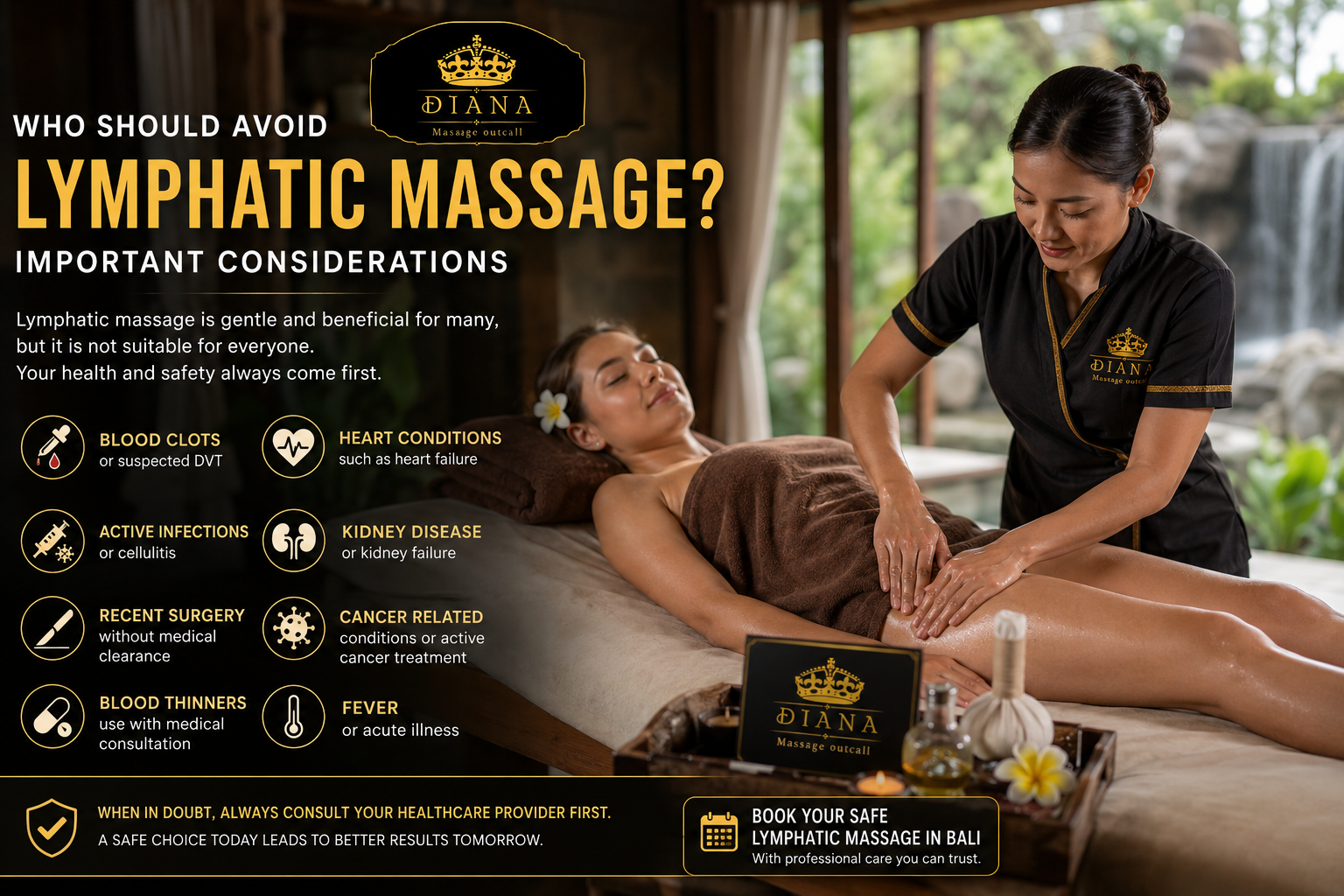
Who Should Avoid Lymphatic Massage is one of the most important questions to ask before booking a treatment, especially if you are visiting Bali and looking for a relaxing wellness experience. Lymphatic massage is gentle, but gentle does not automatically mean appropriate for everyone.
A common mistake is to book a session simply because you have swelling, feel bloated, recently travelled, or want a lighter feeling after several days of holiday meals. In some situations, the right decision is to postpone treatment, speak with a doctor first, or choose a different type of massage.
This guide explains who should avoid lymphatic massage, when professional medical advice is important, what questions to ask a therapist in Bali, and how to make a safer booking decision without unnecessary fear.
Lymphatic Home Massage and Spa Bali: Start With Safety
When people search for lymphatic massage and Spa Bali, they often expect a relaxing spa treatment. That can be appropriate for some healthy adults, but lymphatic drainage is different from a conventional relaxation massage.
Manual lymphatic drainage uses very light, controlled movements designed to encourage fluid movement through the lymphatic system. It is commonly used as part of care for lymphedema and swelling associated with certain medical conditions or treatments.
The pressure should generally feel much lighter than deep tissue massage. A therapist should not simply use stronger pressure because a client asks for a more intense experience.
The most useful question is therefore not only, “Does lymphatic massage feel good?”
It is also, “Is this treatment suitable for my current health situation?”
That distinction matters when choosing a lymphatic drainage massage in Bali, particularly if you are recovering from surgery, taking medication, or experiencing unexplained swelling.
Who Should Avoid Lymphatic Massage?
There is no single list that can determine suitability for every person. Your medical history, current symptoms, medications, and reason for seeking treatment all matter.
However, who should avoid lymphatic massage becomes much clearer when looking at situations where massage could potentially make an existing problem worse or delay appropriate medical care.
People With a Current Blood Clot or Suspected DVT
One of the most important situations is a known or suspected blood clot, including deep vein thrombosis.
If one leg suddenly becomes swollen, painful, warm, or noticeably different from the other, do not book a massage to see whether the swelling improves.
A suspected clot requires medical assessment rather than massage.
Cleveland Clinic specifically lists blood clots and deep vein thrombosis among situations in which lymphatic drainage massage should be avoided.
This is especially important for travellers in Bali because long flights, prolonged sitting, dehydration, and recent surgery can be relevant factors in a person’s health history.
If you have symptoms that could indicate a clot, seek medical care instead of going directly to a spa.
People With an Active Infection or Cellulitis
Another important answer to who should avoid lymphatic massage is anyone with an active infection that has not been appropriately treated.
Cellulitis, fever, and other active infections are commonly listed as reasons to avoid lymphatic drainage until the underlying problem has been addressed.
For example, imagine you wake up in Bali with a red, hot, painful area on your leg and feel feverish. A lymphatic massage is not the appropriate next step.
The priority is medical evaluation.
This is one reason a responsible therapist should ask about your health before beginning treatment rather than immediately starting a massage.
People With Certain Heart Conditions
People with significant heart disease, particularly conditions involving fluid overload or reduced cardiac function, should discuss lymphatic massage with their healthcare provider before treatment.
The reason is practical. Lymphatic drainage influences the movement of fluid within the body, while serious heart conditions can affect how effectively the body manages fluid.
Cleveland Clinic lists heart disease among conditions in which lymphatic drainage massage should be avoided without appropriate medical guidance.
If you have been diagnosed with heart failure or another significant cardiac condition, do not assume that a gentle massage is automatically safe.
Ask your doctor whether manual lymphatic drainage is appropriate for you.
People With Significant Kidney Disease or Kidney Failure
Kidneys play an important role in maintaining fluid balance. When kidney function is significantly impaired, swelling can have a medical cause that needs proper evaluation.
For this reason, kidney disease and kidney failure are important considerations when deciding who should avoid lymphatic massage.
Cleveland Clinic specifically identifies kidney failure as a condition where lymphatic drainage massage should be avoided.
If your swelling is new, persistent, or worsening, finding the cause is more important than trying to make the swelling temporarily look better.
People With Fever or an Acute Illness
A holiday in Bali can make it tempting to continue with spa plans even when you are not feeling well.
That is not always a good idea.
If you have a fever, active infection, significant weakness, or another acute illness, postpone lymphatic massage and focus on getting appropriate medical advice.
A massage should complement appropriate healthcare, not replace it.
People With Certain Cancer Related Concerns
Cancer and lymphatic massage require particularly individualised consideration.
Lymphatic drainage is sometimes used as part of supportive care for lymphedema after cancer treatment. However, that does not mean every person with cancer should receive massage without professional guidance.
Cleveland Clinic notes that lymphatic drainage should not be performed directly over cancerous tissue or skin damaged by radiation therapy.
If you have current cancer, recently completed cancer treatment, have lymph node involvement, or have received radiation therapy, discuss massage with your medical team before booking.
The key point is that a cancer history does not automatically mean “never massage.” It means the treatment needs to be appropriately assessed.
People Recovering From Surgery Without Medical Clearance
Postoperative lymphatic massage has become increasingly popular, especially after cosmetic procedures.
However, post surgery lymphatic massage should not be treated as a universal spa treatment.
The timing of treatment depends on the procedure, your healing progress, complications, medications, and instructions from your surgeon.
Cleveland Clinic also recommends discussing massage with a healthcare provider following surgery and notes that acute injuries and recent surgery can require additional caution.
If your surgeon has specifically recommended manual lymphatic drainage, provide the therapist with the relevant instructions.
A good therapist should be comfortable working within those boundaries.
What About Blood Thinners?
This is another question that often gets overlooked.
If you take anticoagulant or blood thinning medication, tell your therapist before treatment.
Blood thinners can increase the likelihood of bruising, and Cleveland Clinic recommends discussing massage with a healthcare provider when a person takes blood thinning medication.
This does not mean every person taking an anticoagulant can never receive any form of massage.
It means the therapist needs accurate information and the treatment may need to be modified or postponed.
Never stop prescribed medication simply because you want to have a massage.
When Swelling Should Be Checked Before Massage
One of the most useful practical rules concerning who should avoid lymphatic massage is this:
If you do not know why you are swollen, find out why before trying to treat the swelling with massage.
Swelling can have many causes, including lymphatic problems, venous problems, injury, medication effects, heart conditions, kidney problems, and other medical conditions.
Lymphedema itself can develop after surgery, radiation therapy, trauma, infection, or other disruption of lymphatic drainage.
A spa treatment can feel relaxing, but it should not be used to diagnose the reason for unexplained swelling.
Warning Signs That Need Medical Attention
Before booking a lymphatic drainage massage Bali service, seek medical evaluation if you experience symptoms such as:
• Sudden swelling, particularly on one side of the body
• Significant pain or warmth accompanying swelling
• Redness with fever
• Shortness of breath
• Chest pain
• Rapidly worsening swelling
• Severe or unexplained weakness
These symptoms can have causes that require medical assessment rather than massage.
Who May Be a Good Candidate for Lymphatic Massage?
Understanding who should avoid lymphatic massage is only half of the decision.
For appropriate clients, manual lymphatic drainage can be a useful part of managing certain types of swelling and lymphedema. It is particularly associated with lymphedema following cancer treatment, including breast cancer surgery.
Healthy adults may also seek lymphatic massage as a wellness treatment.
However, expectations should remain realistic.
If you are simply looking for relaxation, facial puffiness reduction, or a gentle body treatment, you may enjoy the experience.
If you have a diagnosed medical condition, the treatment should be considered as part of your wider care rather than as a replacement for medical treatment.
What Can You Realistically Expect From Lymphatic Massage?
A common misconception is that lymphatic massage should feel intense.
It generally should not.
The technique is characterised by gentle, controlled movements rather than aggressive pressure.
Depending on why you are receiving treatment, you may notice a temporary feeling of reduced heaviness or swelling. Some people also find the treatment deeply relaxing.
However, results vary.
Cleveland Clinic notes that people may experience temporary effects such as fatigue, headache, or nausea following lymphatic drainage massage.
If you repeatedly receive treatments without improvement, that is a reason to reassess the underlying issue rather than automatically increasing the number or intensity of sessions.
Choosing a Lymphatic Massage in Bali
Bali has a large wellness and spa market, so the challenge is not finding a massage.
The challenge is finding the right treatment for your situation.
Current Bali listings show a wide range of providers offering lymphatic drainage treatments across areas such as Ubud, Canggu, Seminyak, Sanur, and other parts of the island.
When comparing lymphatic massage Bali options, look beyond photographs and promotional language.
Ask these questions before booking:
Does the Therapist Ask About Your Health?
A responsible therapist should ask about relevant medical history, recent surgery, medications, injuries, pregnancy, and current symptoms.
If you mention significant swelling and the therapist immediately promises to “flush out toxins” without asking why you are swollen, consider choosing another provider.
Does the Therapist Explain the Technique?
Lymphatic drainage should not simply be presented as an ordinary massage with a different name.
Ask what technique will be used, how much pressure is expected, and whether the therapist has experience with the specific reason you want treatment.
Can the Treatment Be Modified?
A good practitioner should be willing to adapt the session.
Your body may not need the same approach every time.
If you are recovering from a procedure, for example, treatment should follow the guidance you received from your healthcare professional rather than a standard spa routine.
Does the Provider Know When to Say No?
This is perhaps the most important quality.
A therapist who refuses treatment because your symptoms require medical assessment is demonstrating professional responsibility.
The goal should not be to sell every client a session.
The goal should be to provide an appropriate service safely.
Practical Experience: What a Good Consultation Looks Like
Consider a common scenario.
A traveller arrives in Bali after a long flight and notices mild, symmetrical ankle puffiness. They otherwise feel well and have no significant medical conditions.
Instead of immediately starting treatment, a careful therapist asks about the flight, existing medical conditions, medications, pain, recent surgery, and other symptoms.
If there are no obvious concerns, the therapist can then discuss whether a gentle lymphatic treatment is appropriate.
Now consider a different client.
They report that one calf has suddenly become swollen and painful after a long flight.
That situation should stop the spa conversation.
The appropriate recommendation is medical assessment, not lymphatic massage.
This simple difference illustrates why who should avoid lymphatic massage is not just an SEO question. It is an important screening question for anyone considering treatment.
Practical Tips Before Your Bali Lymphatic Massage
If you have already confirmed that treatment is appropriate, a few simple steps can make the experience more comfortable.
Tell Your Therapist the Truth
Mention recent surgery, medication, medical conditions, pregnancy, injuries, and unusual symptoms.
Do not leave out information because you think it will make the therapist cancel your appointment.
Accurate information helps the therapist make better decisions.
Do Not Chase Pressure
More pressure does not automatically mean better lymphatic drainage.
If you booked a lymphatic treatment, expect a gentle approach rather than deep tissue pressure.
Keep Your Expectations Realistic
Be cautious about claims that lymphatic massage can “detox” the body, permanently remove fat, or cure medical conditions.
The strongest practical use of lymphatic drainage is related to managing certain types of swelling and lymphedema, not replacing medical treatment.
Ask What Happens If You Feel Unwell
Before starting, know how the therapist will respond if you become dizzy, nauseous, uncomfortable, or experience pain.
You should always feel comfortable stopping the session.
Lymphatic Massage for Tourists in Bali
For tourists, convenience can sometimes create another risk.
You may have only a few days in Bali and want to fit a massage into your itinerary. That does not mean every treatment should happen immediately.
If you have recently undergone surgery overseas, received a new diagnosis, started medication, or developed unexplained swelling during travel, medical advice should take priority.
For otherwise suitable clients, Bali offers many wellness options, including dedicated lymphatic drainage services and spa based treatments. Current listings demonstrate that availability is widespread across the island.
The best lymphatic massage spa Bali experience is therefore not necessarily the cheapest or the most luxurious.
It is the one where the practitioner understands your needs, screens appropriately, communicates clearly, and knows when treatment should be postponed.
Frequently Asked Questions About Who Should Avoid Lymphatic Massage
Who should avoid lymphatic massage?
People with conditions such as active infection, cellulitis, fever, blood clots or DVT, certain heart conditions, and kidney failure should avoid lymphatic drainage unless their healthcare provider has specifically advised that treatment is appropriate.
People with cancer, recent surgery, significant medical conditions, or unexplained swelling should seek appropriate medical guidance before booking.
Can you have lymphatic massage if you have a blood clot?
No. A known or suspected blood clot is an important reason not to receive lymphatic drainage massage.
If you have symptoms suggesting DVT, seek medical assessment rather than attempting to massage the area.
Can I get lymphatic massage after surgery?
Possibly, but timing and suitability depend on the surgery and your recovery.
If your surgeon or healthcare provider has recommended lymphatic drainage, follow their instructions and tell your therapist exactly what procedure you had and when it occurred.
Can you have lymphatic massage while taking blood thinners?
You should disclose blood thinning medication before treatment and ask your healthcare provider whether massage is appropriate.
Blood thinners can increase bruising risk, so treatment may need to be adjusted.
Is lymphatic massage safe for everyone?
No massage technique is appropriate for everyone.
Although lymphatic drainage is gentle, medical conditions can change whether it is suitable. This is why screening and honest communication with the therapist are important.
Should I get lymphatic massage for unexplained swelling?
It is better to identify the reason for unexplained swelling first.
Lymphedema, venous problems, injury, kidney disease, heart conditions, infection, and other issues can contribute to swelling.
Massage should not replace medical assessment.
Final Thoughts on Who Should Avoid Lymphatic Massage
Knowing who should avoid lymphatic massage helps you make a safer and more informed decision before booking a treatment in Bali.
The most important situations include active infection, cellulitis, fever, blood clots or suspected DVT, significant heart disease, kidney failure, certain cancer related situations, recent surgery without appropriate clearance, and unexplained swelling.
At the same time, being cautious does not mean lymphatic massage is unsuitable for everyone.
For the right client, gentle lymphatic drainage may be a relaxing treatment and can form part of a broader approach to managing certain types of swelling and lymphedema.
The practical rule is simple: do not use a spa treatment to investigate a medical problem.
If you are healthy and looking for a gentle wellness experience, discuss your goals with a qualified practitioner. If you have a medical condition, recent procedure, medication, or unexplained symptoms, obtain appropriate medical guidance before treatment.
When choosing lymphatic massage Bali, prioritise practitioner quality, honest communication, appropriate screening, and realistic expectations over aggressive promises.
For those who have confirmed that lymphatic treatment is appropriate, you can Discover More about the available wellness options and Book Your Massage when you are ready for a personalised Bali experience.