Lymph Nodes Lymphatic Massage Why This Matters When Your Body Feels Swollen
Lymph Nodes Lymphatic Massage becomes especially relevant when you wake up feeling puffy, your legs feel heavy after a flight, your abdomen feels uncomfortable, or your face looks more swollen than usual. Many people searching for lymphatic massage in Bali are not simply looking for another relaxing treatment. They want to understand why the technique is so gentle and why a therapist spends time around the neck, armpits, abdomen, or groin instead of simply pressing harder on the area that feels swollen.
That is where Lymphatic Massage Bali services can be useful when the treatment is performed with the correct technique and appropriate expectations. Lymphatic drainage is different from deep tissue massage because the goal is not to work deeply into the muscles. The technique uses light, rhythmic movements to encourage lymph fluid to move through available lymphatic pathways.
If you have ever wondered why a lymphatic therapist appears to work on one area before addressing another, the answer is connected to lymphatic anatomy. The treatment is planned around pathways, vessels, and lymph nodes rather than simply following the location of muscle tension.
This distinction is important in Bali, where visitors often combine wellness treatments with long flights, sightseeing, heat, exercise, changes in routine, and extended periods of sitting. A good lymphatic session should be based on what your body actually needs rather than a standard massage routine.
What Are Lymph Nodes and What Do They Actually Do?
Lymph nodes are small structures positioned along the lymphatic system. They act as important immune checkpoints because lymph fluid passes through them before continuing through the lymphatic network.
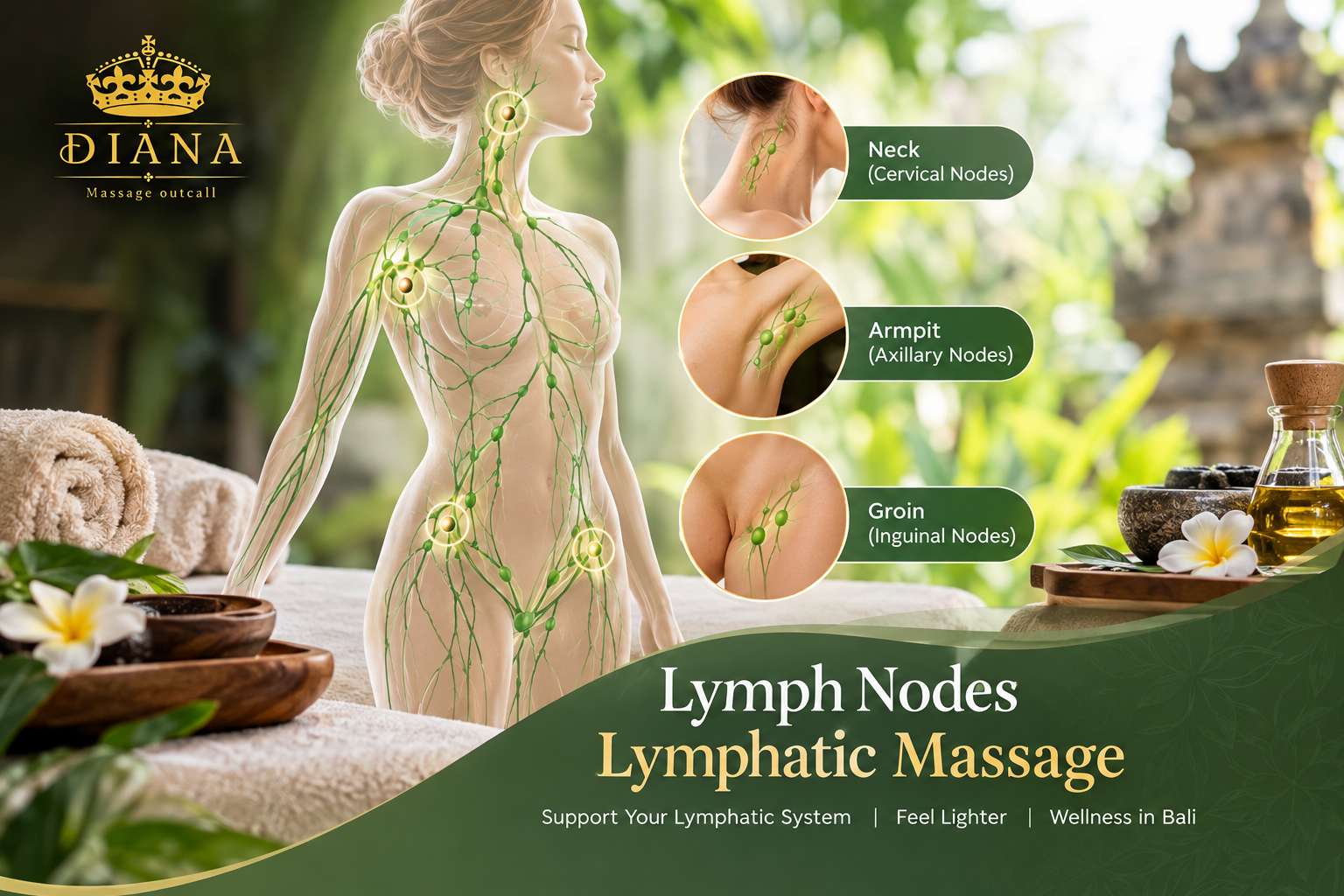
The human body contains hundreds of lymph nodes distributed throughout different regions. Common groups include the cervical lymph nodes around the neck, axillary lymph nodes around the armpits, and inguinal lymph nodes around the groin.
Lymph nodes contain immune cells that monitor lymph for foreign substances, damaged cells, and other material that needs to be identified or processed. This is one reason lymph nodes can become enlarged when your body is responding to an infection or another medical issue.
The lymphatic system also has an important fluid balance function. Lymphatic vessels collect excess fluid from tissues and transport it through the lymphatic network. Eventually, lymph returns to the bloodstream.
So when people talk about Lymph Nodes Lymphatic Massage, it is important to understand that the therapist is not manually squeezing the lymph nodes to make them release toxins.
The practical goal is to encourage the movement of lymph fluid through functioning lymphatic pathways. The therapist uses carefully directed skin movements because much of the lymphatic network targeted during manual lymphatic drainage is relatively superficial.
Why Does Lymphatic Massage Target Areas Around Lymph Nodes?
One of the biggest mistakes people make when trying lymphatic massage is assuming that the swollen or uncomfortable area should always receive the strongest massage.
That approach may make sense for some conventional massage techniques, but lymphatic drainage works differently.
During Lymph Nodes Lymphatic Massage, a therapist may begin around central areas before working toward a particular region. This can help prepare the drainage pathways before encouraging fluid movement from the area being treated.
For example, a session may involve gentle work around the neck, chest, armpits, abdomen, or groin depending on the treatment plan. Cleveland Clinic describes lymphatic drainage as beginning with areas containing major lymph nodes before guiding excess fluid toward functioning lymphatic pathways.
This is why the technique can look surprisingly gentle.
The objective is not to create pain, deep pressure, or soreness. A practitioner is working with the superficial tissues and directing movement in a specific sequence.
The Neck and Cervical Lymph Nodes
The neck contains groups of lymph nodes that receive lymphatic drainage from the head and surrounding structures.
A therapist may use gentle movements around the neck as part of a facial or upper body lymphatic session. This can be particularly relevant when the client is concerned about temporary facial puffiness.
The pressure should remain light. If a technique feels like deep tissue work around the neck, it is reasonable to ask the therapist to explain what technique they are using.
The Armpit and Axillary Lymph Nodes
The armpit contains axillary lymph nodes that are part of important lymphatic drainage pathways for the upper body.
In practical lymphatic treatment, this region may be included when working with the chest, arm, or upper body. The therapist is not trying to force fluid through a blocked area. Instead, the technique is intended to encourage movement through available pathways.
The Groin and Inguinal Lymph Nodes
The groin contains inguinal lymph nodes that receive lymph from parts of the lower body.
When treating legs or lower body swelling, a professional may incorporate gentle work around this region before addressing more distant areas.
This is one reason Lymph Nodes Lymphatic Massage should not be approached as a simple full body rubbing technique. The sequence and direction matter.
What Happens During Lymph Nodes Lymphatic Massage?
If you have never experienced Lymph Nodes Lymphatic Massage, the first surprise is usually the pressure.
It can feel much lighter than a Balinese massage, sports massage, or deep tissue treatment.
A properly performed session may involve slow, rhythmic movements that gently stretch the skin. The therapist may spend more time preparing certain areas before gradually working toward areas where fluid accumulation or puffiness is present.
A professional session should also begin with questions.
A responsible therapist should want to know whether you recently had surgery, have an existing medical condition, are experiencing unusual swelling, have an infection, or have been advised by a healthcare professional to receive lymphatic drainage.
This matters because lymphatic massage is not appropriate for everyone.
Cleveland Clinic advises avoiding lymphatic drainage massage in situations including blood clots, deep vein thrombosis, cellulitis, fever, certain heart conditions, kidney failure, infection, and stroke.
If swelling is new, unexplained, painful, one sided, associated with redness or fever, or rapidly increasing, massage should not be used as a substitute for medical assessment.
The Realistic Benefits of Lymphatic Massage
The strongest practical reason to consider Lymph Nodes Lymphatic Massage is fluid management, particularly when the lymphatic system is not moving fluid effectively.
Manual lymphatic drainage is commonly used as part of care for lymphedema and certain types of swelling. It may also be used after particular medical procedures when recommended by the appropriate healthcare professional.
For wellness clients without diagnosed lymphatic problems, expectations should be more realistic.
A person may feel relaxed or temporarily less puffy after treatment. Facial lymphatic massage can also reduce the appearance of temporary facial puffiness. However, current medical sources do not support presenting lymphatic massage as a universal detox treatment or a guaranteed weight loss method.
This distinction is important for anyone comparing lymphatic drainage massage Bali services.
A treatment can feel beneficial without needing exaggerated promises.
Temporary Puffiness
Some clients seek Lymph Nodes Lymphatic Massage because their face or body feels puffy.
The sensation can be particularly noticeable after travel, changes in sleep, prolonged sitting, salty meals, or changes in daily routine.
Lymphatic drainage may help move excess fluid through the lymphatic pathways, although the underlying cause of persistent swelling should always be considered.
A Lighter Body Sensation
Some people describe their body as feeling lighter after a gentle lymphatic session.
That sensation should not automatically be interpreted as fat loss or detoxification. A more reasonable explanation may be temporary changes in fluid movement and relaxation.
Relaxation
The slow rhythm and light pressure can make lymphatic massage deeply relaxing.
For someone who has spent several days travelling around Bali, walking extensively, sitting during transportation, or dealing with a busy schedule, the gentle nature of the treatment can be a welcome contrast to stronger massage styles.
Lymphatic Massage Compared With Deep Tissue Massage
Understanding the difference can prevent you from booking the wrong treatment.
Deep tissue massage generally focuses on muscles, tension, and deeper soft tissues. It can involve stronger pressure and may be appropriate for certain muscular complaints.
Lymphatic drainage uses a completely different approach.
Manual lymphatic drainage uses gentle, rhythmic movements directed along lymphatic pathways. The purpose is to support lymph movement rather than release deep muscular tension.
If your main complaint is a tight back after exercise, deep tissue or sports massage may be more appropriate.
If your concern is swelling or fluid accumulation and you have been advised that lymphatic drainage is suitable, Lymph Nodes Lymphatic Massage may be a better match.
The right choice depends on the problem you are actually trying to solve.
Practical Experience: What Clients Often Notice During a Session
A common mistake when booking Lymph Nodes Lymphatic Massage is expecting an intense sensation.
Instead, the treatment can feel subtle.
Some people notice warmth, gentle skin movement, relaxation, or a gradual change in how a particular area feels. Others simply feel calm during the session and notice changes afterward.
The response is not identical for everyone.
One client may be primarily concerned about facial puffiness before an event. Another may be seeking professional lymphatic support after medical treatment. Another may simply want a gentle wellness treatment during a Bali holiday.
These situations should not be treated as the same case.
For clients with a medical condition, the therapist should work within appropriate professional boundaries and coordinate with medical advice when necessary.
For wellness clients, the goal should be comfort, relaxation, and realistic expectations rather than promises of dramatic physical transformation.
A Practical Example: Facial Puffiness Before a Bali Event
Imagine arriving in Bali after a long flight and noticing that your face looks puffier than usual.
Your first instinct might be to book a strong facial massage.
However, a lighter lymphatic approach may be more suitable if your concern is temporary fluid related puffiness rather than muscle tension.
A trained practitioner may work gently around the neck and upper body pathways before addressing the face. The treatment is not about aggressively pressing swollen tissue. It is about following a logical lymphatic sequence.
This is one of the clearest examples of why understanding Lymph Nodes Lymphatic Massage matters.
The treatment should be designed around how fluid moves, not simply around where you can see puffiness.
How to Choose Lymphatic Massage in Bali
Searching for Lymphatic Massage Bali can bring up many different types of treatments.
Do not choose based on price alone.
Start by asking what technique the therapist uses. Ask whether the treatment is manual lymphatic drainage, a cosmetic lymphatic treatment, or another type of body massage marketed as lymphatic.
Then ask what happens during the consultation.
A professional service should be willing to discuss your goals and explain what the treatment can realistically do.
Check the Therapist’s Approach
A good therapist should understand that lymphatic massage is not supposed to feel like deep tissue massage.
If the service emphasizes extremely strong pressure, aggressive kneading, or painful techniques as the main feature of lymphatic drainage, ask questions before booking.
Ask About Your Specific Goal
Tell the therapist why you are booking.
For example, explain whether you are concerned about facial puffiness, general relaxation, temporary swelling, post travel discomfort, or medically diagnosed lymphedema.
The more specific you are, the easier it is to determine whether the treatment is appropriate.
Be Careful With Medical Claims
Avoid services that promise to cure disease, remove all toxins, permanently reshape your body, or replace medical treatment.
Current evidence supports lymphatic drainage most clearly for selected swelling and lymphedema management. Broader wellness claims are much less certain.
What Should You Do Before Lymph Nodes Lymphatic Massage?
Preparation does not need to be complicated.
Arrive hydrated and avoid arriving immediately after a very heavy meal if abdominal work is planned.
Wear comfortable clothing and tell the therapist about recent surgery, injuries, medications, medical diagnoses, or unusual symptoms that could affect whether treatment is appropriate.
If you have persistent swelling, especially if it is unexplained, ask a healthcare professional about the cause before relying on massage.
If you have been diagnosed with lymphedema, your treatment plan may include more than massage. Complete decongestive therapy can include components such as compression, exercise, skin care, and manual lymphatic drainage depending on the individual situation.
How Often Should You Have Lymphatic Massage?
There is no single schedule that is correct for everyone.
For medical lymphedema, frequency should follow the treatment plan recommended by an appropriately qualified healthcare professional.
For wellness clients, occasional sessions may be chosen around travel, events, or personal relaxation goals.
Do not assume that more sessions automatically produce better results.
The important question is whether the treatment has a clear purpose and whether your body is responding comfortably.
When Should You Not Book Lymph Nodes Lymphatic Massage?
There are situations where massage should be postponed or avoided.
Do not use lymphatic massage to self treat unexplained swelling that may require medical attention.
Professional sources identify conditions such as active infection, cellulitis, blood clots, deep vein thrombosis, fever, certain heart conditions, and kidney failure as reasons lymphatic drainage may be inappropriate.
After cancer treatment or surgery involving lymph nodes, lymphatic drainage may sometimes be part of recovery, but it should follow guidance from the relevant medical team.
If you are unsure, medical advice should come before booking.
Lymph Nodes Lymphatic Massage: Practical Tips From a Treatment Perspective
First, do not judge a lymphatic treatment by pressure.
More pressure does not mean more effective lymphatic drainage.
Second, explain your actual concern before the session. A therapist needs to know whether your priority is facial puffiness, lower body swelling, post operative care, or relaxation.
Third, ask what technique will be used.
Fourth, be realistic about the outcome. A temporary reduction in puffiness is different from permanent fat loss.
Fifth, pay attention to how your body responds.
If you develop unusual pain, significant worsening of symptoms, fever, redness, or other concerning symptoms, stop treating the issue as a simple wellness problem and seek appropriate medical advice.
These practical points are more useful than choosing a treatment simply because the word lymphatic appears in the service name.
Frequently Asked Questions About Lymph Nodes Lymphatic Massage
Does lymphatic massage actually target lymph nodes?
Yes, Lymph Nodes Lymphatic Massage is designed around lymphatic pathways and regions containing lymph nodes. However, the therapist is not trying to squeeze or force the lymph nodes themselves. The technique uses gentle movements to encourage lymph fluid toward functioning drainage pathways.
Why is lymphatic massage so gentle?
The lymphatic vessels being targeted are relatively close to the surface of the body. Manual lymphatic drainage therefore uses light, rhythmic movements rather than the deeper pressure associated with deep tissue massage.
Can lymphatic massage remove toxins?
It is better not to think of Lymph Nodes Lymphatic Massage as a detox treatment. The lymphatic system has important immune and fluid balance functions, but current evidence does not support broad claims that massage removes toxins from an otherwise healthy body.
Can lymphatic massage help with swelling?
It can help in appropriate cases, particularly when swelling is related to impaired lymphatic drainage. Manual lymphatic drainage is commonly used as part of treatment for lymphedema. However, unexplained or sudden swelling should be medically assessed rather than automatically treated with massage.
Is lymphatic massage painful?
It should generally feel gentle rather than painful. Strong pressure is not required for effective manual lymphatic drainage. If a treatment becomes painful, tell the therapist immediately.
How is lymphatic massage different from deep tissue massage?
Deep tissue massage focuses more on muscles and deeper soft tissues. Lymph Nodes Lymphatic Massage uses lighter movements directed along lymphatic pathways. Choosing between them depends on whether your main goal is muscular tension or lymphatic fluid management.
Is lymphatic massage suitable after surgery?
Sometimes, but this depends on the surgery and your recovery status. After procedures involving lymph nodes or significant tissue changes, follow the advice of your surgeon or healthcare provider before receiving lymphatic treatment.
Where can I find lymphatic massage in Bali?
You can find lymphatic drainage massage Bali services in several areas, including Ubud, Canggu, Seminyak, Sanur, and other popular wellness destinations. Availability and practitioner qualifications vary, so check the treatment method, therapist experience, consultation process, and safety information before booking.
Final Thoughts on Lymph Nodes Lymphatic Massage
Lymph Nodes Lymphatic Massage makes more sense when you understand that lymphatic drainage is about pathways, fluid movement, and gentle stimulation rather than deep pressure.
Lymph nodes are important parts of the immune and lymphatic systems. They filter lymph and provide a place where immune cells can identify and process foreign material and damaged cells.
Lymphatic massage may be useful for appropriate cases of swelling and lymphedema, and it can also provide a gentle wellness experience for people who simply want relaxation or temporary relief from puffiness.
However, good lymphatic massage should never depend on exaggerated claims.
If you are looking for Lymphatic Massage Bali, choose a service that understands the difference between lymphatic drainage and conventional massage, asks about your health and treatment goals, uses appropriate pressure, and explains what you can realistically expect.
If you are ready to learn more about the right treatment for your needs, Discover More about professional lymphatic care in Bali and explore the available treatment options before you Book Now.