Can Lymphatic Massage Help with Swelling in the Legs and Feet
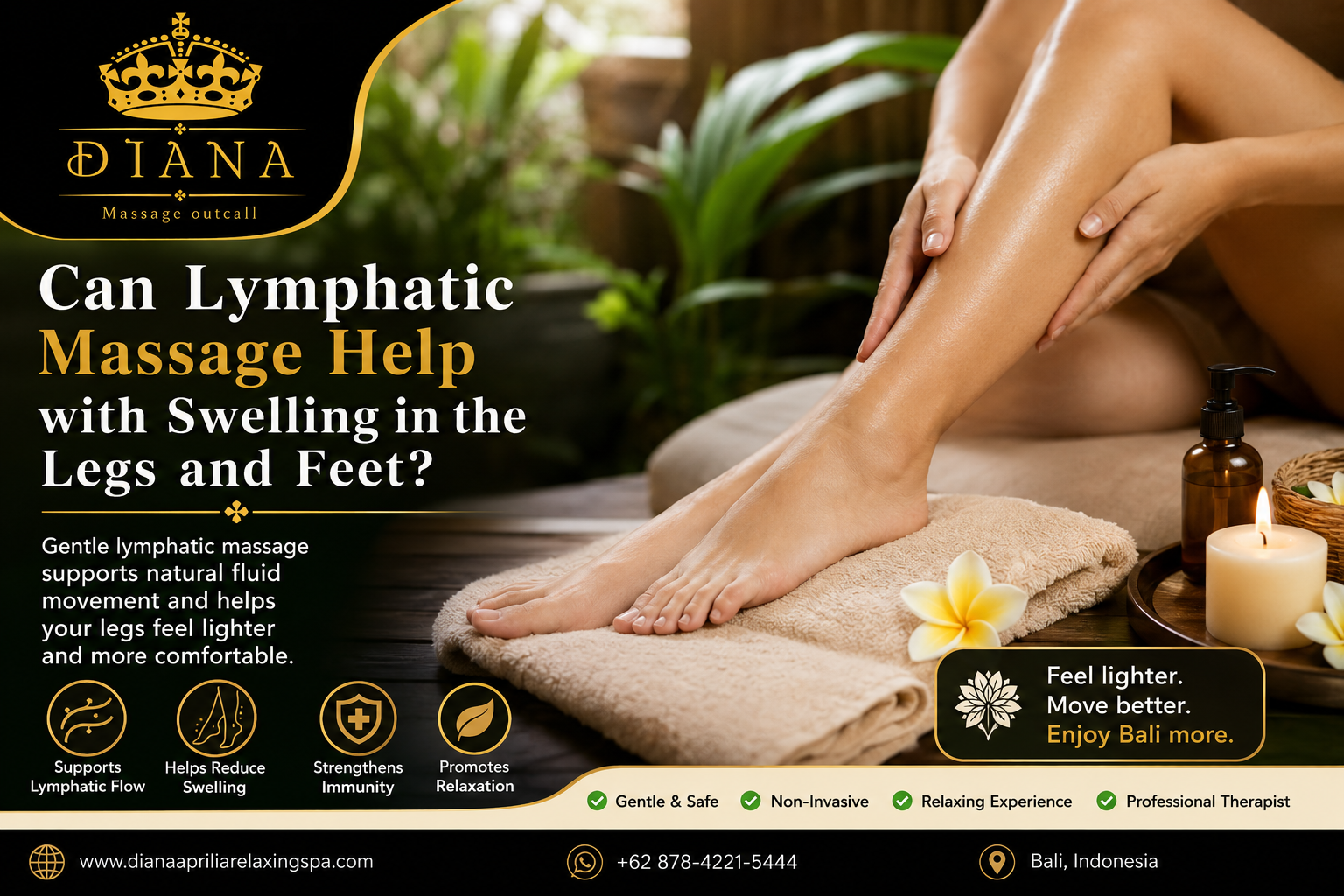
Lymphatic Massage Help is a common search for people who notice swollen feet, puffy ankles, or heavy legs after a long flight, hours of walking, prolonged sitting, intense exercise, or spending several days in Bali. The important question is not simply whether massage feels relaxing. The real question is whether the swelling is suitable for lymphatic massage and whether the treatment addresses the likely reason behind the fluid buildup.
For visitors staying in Bali, this concern often appears after several days of travel. Long flights, walking around tourist areas, sitting during transfers, heat, and changes in daily activity can all make the legs feel heavier. At Diana Aprilia Relaxing Spa, a practical approach should always begin by understanding the type of swelling rather than assuming every swollen leg needs the same massage.
Can Lymphatic Massage Help Reduce Swelling in the Legs and Feet?
Yes, Lymphatic Massage Help can be useful when swelling is related to fluid accumulation and the lymphatic system can benefit from gentle stimulation. Manual lymphatic drainage is a specialised technique used as part of lymphoedema management, and NHS guidance describes it as a technique that can stimulate lymph flow and reduce swelling.
However, this does not mean every swollen foot should immediately receive a massage. Swelling can have many causes, including prolonged sitting or standing, injury, certain medications, pregnancy, varicose veins, and problems involving the heart, kidneys, liver, or blood vessels. A blood clot can also cause swelling.
That distinction matters.
A person who develops mild puffiness after a long flight may have a very different situation from someone who suddenly develops severe swelling in one leg with pain, warmth, or redness.
This is why good lymphatic massage for swollen legs should begin with observation and appropriate screening rather than simply applying stronger pressure.
Why Legs and Feet Can Become Swollen
The legs are particularly vulnerable to fluid accumulation because gravity encourages fluid to remain in the lower part of the body, especially when someone stays in one position for a long time.
Travel is a simple example.
Someone may spend many hours sitting on a plane, followed by another hour in a car, then arrive at a hotel and spend the evening sitting or sleeping. The legs have had very little muscular movement to help circulate fluid.
Reduced movement can also affect lymphatic drainage because muscle activity around lymphatic vessels helps move fluid through the body.
Heat can make the sensation more noticeable as well. Bali’s tropical climate may make visitors feel that their feet and ankles are heavier than usual, especially when combined with long periods of walking or standing.
Other situations can include:
- Long distance flights
- Prolonged sitting
- Prolonged standing
- High levels of physical activity
- Minor temporary fluid retention
- Certain medications
- Varicose veins
- Lymphatic system problems
- Injury or inflammation
- Certain medical conditions
Because the causes are so different, Lymphatic Massage Help should be considered as one possible supportive approach rather than a universal treatment for swelling.
How Lymphatic Massage May Help Swollen Legs
The main difference between lymphatic massage and conventional massage is the way the therapist approaches the tissue.
Lymphatic drainage uses gentle, controlled movements rather than deep pressure. The goal is to encourage fluid movement through lymphatic pathways rather than aggressively compressing already swollen tissue.
For someone experiencing suitable temporary swelling, the treatment may help the legs feel lighter and less congested.
A person may notice that shoes feel more comfortable, the ankles look less puffy, or the legs feel less heavy after treatment. These changes can be encouraging, but they should not be interpreted as proof that an underlying medical condition has been cured.
For diagnosed lymphoedema, specialised lymphatic massage is generally used as part of a broader management plan. NHS guidance describes decongestive lymphatic therapy as a combination of specialised massage, compression, exercise, and skin care.
This is an important practical point.
Lymphatic Massage Help is often most useful when it forms part of an appropriate overall routine instead of being treated as a standalone solution.
What Does Lymphatic Massage Feel Like?
People sometimes expect lymphatic massage to feel like deep tissue massage.
It should not.
The movements are generally light and rhythmic. A trained therapist works with the skin and superficial tissues using specific directional techniques.
For a traveler with tired feet, this can feel surprisingly gentle compared with traditional massage.
Some clients initially wonder whether a treatment can be effective without strong pressure. That is understandable because many people associate therapeutic massage with deep pressure.
With lymphatic techniques, however, stronger pressure is not automatically better.
The objective is different.
A suitable lymphatic drainage massage for leg swelling focuses on supporting fluid movement rather than working deeply into muscles.
Lymphatic Massage Help After a Long Flight
One of the most practical situations is swelling after air travel.
Imagine arriving in Bali after many hours of sitting. Your ankles look slightly larger, your shoes feel tighter, and your legs feel heavy. You may not have pain or other concerning symptoms.
In this situation, gentle movement can be helpful. Walking, changing position regularly, elevating the legs when resting, and maintaining hydration are sensible measures. NHS guidance also recommends gentle exercise and elevating swollen legs when possible.
If the swelling is appropriate for massage, Lymphatic Massage Help may complement these basic measures.
The important word is complement.
Massage should not replace medical assessment when the swelling is unexplained, severe, sudden, painful, or associated with other concerning symptoms.
Lymphatic Massage Help for Feet That Feel Heavy
Swollen feet can be particularly uncomfortable because even ordinary shoes may suddenly feel restrictive.
Some people describe the sensation as pressure around the toes, fullness across the top of the foot, or tightness around the ankle.
If the swelling is temporary and not associated with warning signs, gentle lymphatic techniques may provide a feeling of relief.
The therapist may work around the lower leg and foot while considering the direction in which fluid needs to move.
This is different from simply rubbing the swollen area as hard as possible.
A practical lymphatic massage for feet and ankles should therefore be gentle, controlled, and adapted to the person’s situation.
When Lymphatic Massage May Not Be Appropriate
This is one of the most important parts of understanding Lymphatic Massage Help.
Massage should not be used as a substitute for identifying potentially serious causes of swelling.
Cleveland Clinic advises avoiding lymphatic drainage massage in situations including blood clots, deep vein thrombosis, cellulitis, fever, infection, certain heart conditions, kidney failure, and other medical circumstances.
Seek medical advice rather than booking a massage if swelling:
- Appears suddenly
- Is severe
- Affects only one leg without an obvious explanation
- Is accompanied by significant pain
- Is red or hot
- Gets progressively worse
- Occurs with fever or chills
- Appears together with shortness of breath or chest discomfort
NHS guidance specifically highlights sudden or severe swelling, unexplained swelling in one leg, redness and warmth, and breathing or chest symptoms as reasons for urgent or immediate medical attention.
This safety step is essential for anyone searching for Lymphatic Massage Help online.
Lymphatic Massage Help for Lymphoedema
Lymphoedema is different from ordinary temporary swelling.
It is a longer term condition involving impaired lymphatic drainage and commonly affects the arms or legs. Symptoms can include swelling, heaviness, difficulty moving the affected area, and changes in the skin over time.
For someone with diagnosed lymphoedema, massage may be one component of a structured treatment plan.
NHS guidance explains that manual lymphatic drainage may be performed by a specialist therapist and can be combined with compression, exercise, and skin care.
Therefore, Lymphatic Massage Help should not be presented as a cure for lymphoedema.
The more realistic goal is symptom management and supporting an established care plan.
Practical Experience: Why Swelling Often Looks Worse at the End of the Day
A common pattern among travelers is that their legs look relatively normal in the morning but become heavier and puffier later in the day.
This can happen when someone spends hours walking, standing, or sitting without enough movement breaks.
For example, a visitor may spend the morning exploring temples, walk around a market at midday, sit in traffic for an extended transfer, and then spend the evening at a restaurant.
By nighttime, the ankles may feel tight.
In a suitable case, Lymphatic Massage Help may provide temporary relief from that heavy feeling.
However, the treatment should be combined with practical habits such as gentle movement and elevation rather than relying on massage alone.
A Practical Approach for Visitors in Bali
If you are experiencing mild swelling during your Bali trip, start by asking yourself a few simple questions.
Did the swelling appear after a long flight?
Have you spent most of the day sitting or standing?
Is the swelling present in both legs?
Is there pain, redness, or unusual warmth?
Has the swelling improved after resting and elevating your legs?
These questions cannot diagnose the cause, but they can help you decide whether the situation sounds like ordinary temporary swelling or something that deserves professional medical assessment.
When appropriate, Lymphatic Massage Help can then become part of a relaxation and recovery routine.
How to Get Better Results From Lymphatic Massage
A massage appointment is only one part of the process.
Move Your Legs Regularly
Walking gently can help activate the muscles of the legs. Muscle movement supports fluid circulation, which is why regular activity is included in lymphoedema management.
If you have been sitting for a long time, stand up and move around periodically rather than remaining in the same position for hours.
Elevate Your Legs
When relaxing, placing your legs in an elevated position can be a simple way to reduce the feeling of heaviness.
This is especially practical after a full day of sightseeing.
Take Care of Your Skin
Swollen skin can become stretched and vulnerable.
Good foot and skin care is important because infections can complicate lymphatic swelling. NHS guidance specifically recommends skin care as part of lymphoedema management.
Avoid Excessive Pressure
If you are specifically seeking lymphatic drainage massage, do not assume that painful pressure will produce better results.
Lymphatic techniques are intentionally gentle.
Do Not Ignore Persistent Swelling
If swelling continues for several days, becomes worse, or has no clear explanation, medical advice is appropriate. Persistent swelling can have many possible causes that massage cannot diagnose or treat.
Lymphatic Massage Help Versus Regular Massage
A regular relaxation massage and lymphatic massage have different objectives.
Traditional massage often focuses on muscles, tension, relaxation, and general body comfort.
Lymphatic drainage uses lighter techniques and focuses on supporting lymphatic fluid movement.
This distinction is particularly important when the primary complaint is swelling rather than muscle tension.
Someone with tight shoulders after working on a laptop may prefer a conventional massage.
Someone whose main complaint is mild fluid related puffiness in the ankles may be looking for a different approach.
Understanding the difference makes it easier to choose a treatment that matches the actual problem.
What to Expect During a Professional Session
A responsible therapist should not immediately begin strong massage simply because you mention swollen legs.
A better process begins with questions about the swelling, recent travel, general symptoms, and relevant circumstances.
The therapist should also understand when massage is inappropriate and when medical evaluation is more suitable.
During a suitable session, the movements should generally feel gentle rather than painful.
Afterwards, some people report feeling lighter or more comfortable, while others may notice little immediate change.
Cleveland Clinic notes that results are not necessarily immediate and that some people may experience temporary effects such as fatigue, headache, or nausea.
This is why realistic expectations are an important part of Lymphatic Massage Help.
How Often Should You Have Lymphatic Massage?
There is no universal schedule for swollen legs.
The appropriate frequency depends on why the swelling is occurring, how long it has been present, whether a medical condition is involved, and what other treatments are being used.
Someone with occasional puffiness after travel may only want an occasional session for comfort.
Someone with diagnosed lymphoedema may require a structured treatment plan under professional supervision.
For that reason, avoid choosing a massage schedule simply because someone online recommends a particular number of sessions.
The better approach is to identify the reason for the swelling first and then choose the appropriate level of support.
Common Mistakes People Make When Treating Swollen Legs
One common mistake is using deep pressure because the legs feel congested.
Another is assuming every swollen ankle is caused by poor lymphatic drainage.
A third mistake is continuing massage when swelling is getting worse.
A fourth is ignoring warning signs because the person assumes massage is harmless.
These mistakes can be avoided by remembering that Lymphatic Massage Help is supportive care, not a diagnostic process.
When swelling is unexplained or concerning, healthcare assessment should come first.
FAQ About Lymphatic Massage Help for Swollen Legs
Can lymphatic massage help swollen feet?
Yes, it may help suitable cases of fluid related swelling by supporting lymphatic fluid movement. However, swollen feet can have many causes, so unexplained or persistent swelling should be assessed before massage.
How quickly can lymphatic massage help swelling?
Some people notice a difference after a session, while others may need repeated treatment or a broader management plan. Results depend heavily on the cause of the swelling.
For diagnosed lymphoedema, manual lymphatic drainage is normally considered alongside other measures such as compression, exercise, and skin care rather than as an isolated treatment.
Can I have lymphatic massage after a long flight?
If the swelling is mild and there are no warning signs, gentle movement, leg elevation, and appropriate massage may be part of a recovery routine.
However, sudden swelling in one leg, significant pain, warmth, redness, or breathing symptoms require medical attention rather than massage.
Is lymphatic massage painful?
It should generally feel gentle rather than painful. Lymphatic drainage uses specialised light movements, so it is different from deep tissue massage.
Can lymphatic massage cure lymphoedema?
No. Lymphoedema is a chronic condition, and there is currently no simple massage cure. Treatment focuses on controlling symptoms and reducing fluid accumulation through approaches such as compression, exercise, skin care, and specialised massage.
Should I massage a suddenly swollen leg?
No. Sudden unexplained swelling, especially when it affects one leg or is accompanied by pain, redness, warmth, or other concerning symptoms, should be medically assessed first. A blood clot is one possible cause of leg swelling and needs appropriate medical attention.
Does lymphatic massage help after walking all day in Bali?
For suitable temporary swelling, gentle lymphatic massage may help the legs feel more comfortable after a long day of walking. It works best when combined with rest, gentle movement, appropriate hydration, and leg elevation.
Final Thoughts on Lymphatic Massage Help for Leg and Foot Swelling
Lymphatic Massage Help can be valuable for some people dealing with mild fluid related swelling in the legs and feet, particularly when the swelling is associated with prolonged sitting, standing, travel, or reduced movement.
The key is understanding what massage can realistically do.
It may support fluid movement and improve comfort, but it does not diagnose the cause of swelling and should not replace medical care when warning signs are present.
For visitors in Bali, the most sensible approach is to combine professional treatment with simple daily habits such as walking, changing positions regularly, elevating the legs, and caring for the skin.
If your swelling is persistent, sudden, painful, hot, red, or unexplained, seek medical advice before arranging a massage.
If your situation is suitable for treatment, Lymphatic Massage Help can become a practical part of a relaxing recovery routine while you enjoy your time in Bali.
For readers who want to learn more about suitable treatments or explore available services, Visit Website to learn more about the treatment approach and Contact Us for further information before booking.