Manual Lymphatic Drainage vs Machine Based Treatments: Which Is Better for You in Bali?
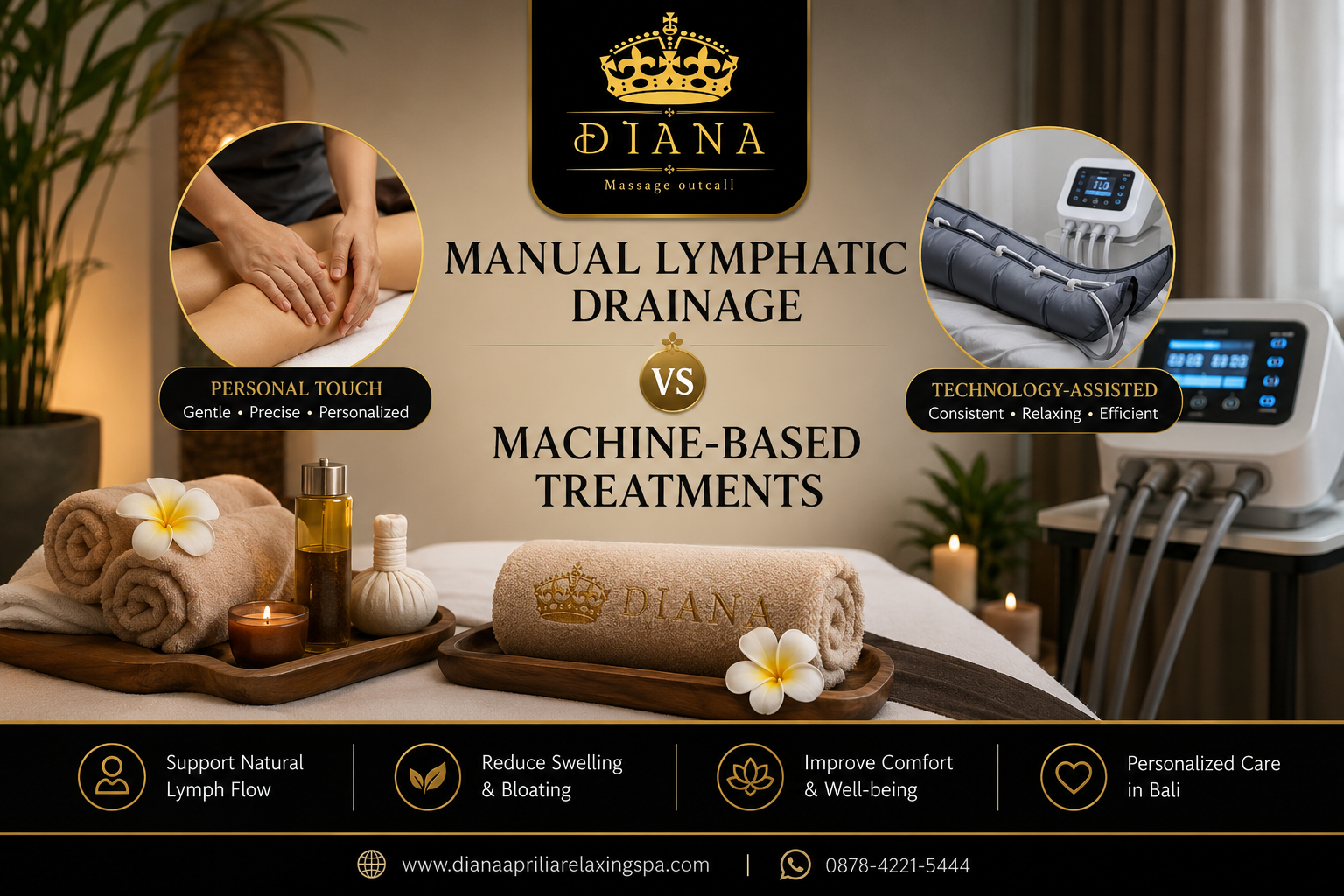
Manual Lymphatic Drainage is often the first option people consider when they experience swelling, fluid retention, post travel heaviness, or recovery related discomfort. However, as lymphatic wellness becomes increasingly popular in Bali, many visitors now have another option: Machine Based Treatments.
This creates a common question. Should you choose the personal touch of a therapist, or should you use modern technology designed to support fluid movement through compression and mechanical stimulation?
The answer is not always as simple as choosing the newest treatment or the one with the strongest pressure. In daily practice, the most suitable approach depends on your condition, your goals, your recovery stage, and how your body responds during and after treatment.
For visitors staying in Bali, this decision can become even more important. Many clients arrive after long flights, intense travel schedules, cosmetic procedures overseas, physical activity, or several days of poor sleep. They may feel swollen, heavy, uncomfortable, or generally different from normal. In these situations, the right lymphatic massage Bali approach can provide a more personalized experience based on the client’s current condition and wellness goals.
Choosing between Manual Lymphatic Drainage and Machine Based Treatments should therefore be based on your individual situation rather than marketing claims alone.
Why More People in Bali Are Comparing Manual and Machine Based Treatments
Bali attracts travelers looking for relaxation, wellness, recovery, and beauty treatments. Many visitors also combine their holiday with cosmetic procedures, fitness activities, long flights, or extended periods of sitting.
These situations can contribute to temporary swelling and a feeling of heaviness, especially in the legs, feet, abdomen, and other areas affected by fluid retention.
A traveler may arrive in Bali after a twelve hour flight and immediately notice that their ankles feel tight. Another visitor may be recovering after a cosmetic procedure and want professional support during their holiday. Digital nomads may spend most of the day sitting with limited movement.
This is why lymphatic drainage treatment in Bali is no longer viewed as a single treatment category. People now compare different approaches before booking an appointment.
Some prefer the precision and personal assessment of a trained therapist. Others prefer the consistency and relaxing sensation of a machine based session.
The important point is that these approaches are not always direct competitors. In many situations, they may serve different purposes or even complement each other.
Manual Lymphatic Drainage: What Makes the Technique Different?
Manual Lymphatic Drainage uses carefully controlled hand movements to work with the body’s superficial lymphatic pathways. The technique is generally gentle and rhythmic rather than deep and forceful.
This is one of the first differences many clients notice.
A traditional deep tissue massage is designed to work on muscles and deeper tissues. Manual Lymphatic Drainage Massage uses a different approach. The therapist observes the client’s condition and applies specific movements based on the area being treated and the desired outcome.
The treatment is not simply about repeatedly pushing fluid in one direction.
A skilled practitioner considers the body as a connected system. The treatment may begin by preparing certain areas before focusing on areas where swelling or fluid retention is more noticeable.
This level of adjustment is one of the main reasons clients choose Professional Manual Lymphatic Drainage instead of a completely automated treatment.
The Biggest Advantage Is Personal Adjustment
In real practice, two people can arrive with the same complaint but need completely different treatment strategies.
For example, one client may have temporary ankle swelling after a long flight. Another may have post procedure swelling several weeks after surgery. A third person may simply feel heavy and uncomfortable after sitting for long periods.
The same machine program may not be appropriate for all three situations.
With Manual Lymphatic Drainage, the therapist can observe the body before and during treatment. Pressure, direction, sequence, and treatment focus can be adjusted based on the client’s response.
This does not mean that manual treatment is automatically better for every person. It means that human assessment provides a level of flexibility that automated equipment cannot completely replace.
Machine Based Treatments: Where Technology Can Be Useful
Machine Based Treatments may include different forms of pneumatic compression or other technology designed to apply controlled mechanical pressure to specific parts of the body.
The exact technology can vary significantly between providers.
Some systems use sequential compression through sleeves or garments. The pressure may be applied in a programmed pattern to create a pumping sensation.
For many clients, this feels relaxing and consistent. The treatment can also be useful when someone wants a structured session without continuous hands on work.
Research on intermittent pneumatic compression has examined its use as an additional tool in lymphatic and edema management. Evidence suggests that the role of compression devices can vary depending on the condition and treatment plan, and they should not automatically be considered a replacement for comprehensive care.
Consistency Is a Major Benefit
One advantage of Machine Based Treatments is consistency.
A machine can deliver a programmed sequence for a specific duration. This can be attractive for clients who enjoy a predictable treatment experience.
For example, a traveler may want a relaxing session after several days of walking around Bali. Someone who experiences temporary leg heaviness may appreciate the sensation of sequential compression.
However, consistency should not be confused with personalization.
A machine follows its program. A practitioner can change the treatment according to what they observe.
This is why the best choice depends on what you need from the session.
Manual Lymphatic Drainage vs Machine Based Treatments: The Key Differences
The clearest way to compare these treatments is to focus on how they work in practical situations.
1. Personal Assessment
Manual Lymphatic Drainage allows the therapist to assess the client before treatment begins.
The practitioner can ask about recent travel, surgery, swelling, discomfort, physical activity, and the client’s main goals.
Machine Based Treatments generally follow a preselected program. The equipment may offer adjustable settings, but the treatment remains based on the capabilities of the device.
If your situation is complex or changing, personal assessment may be especially valuable.
2. Treatment Precision
Manual work allows the practitioner to respond to differences between the left and right side of the body.
For example, one ankle may be more swollen than the other. One area may feel more sensitive. A client may have a specific area that requires more attention.
This type of adjustment is a major advantage of Manual Lymphatic Drainage Therapy.
Machine based treatment can provide broad and consistent compression, but it may not offer the same level of moment to moment adjustment.
3. Sensation During Treatment
Many people describe manual lymphatic work as gentle, rhythmic, and calming.
Machine based sessions may create a more noticeable squeezing or pulsing sensation depending on the device and setting.
Neither experience is automatically better.
Some clients prefer the relaxing human touch of a therapist. Others enjoy the sensation of automated compression.
Your personal preference can therefore be an important part of the decision.
4. Treatment Flexibility
With Manual Lymphatic Drainage, a practitioner can change the sequence during the appointment.
The session may be modified if the client feels uncomfortable or if a particular area needs additional attention.
Machine based sessions are more structured. The available adjustments depend on the equipment and the provider’s protocols.
For a straightforward wellness session, this structure may be perfectly suitable.
For post procedure recovery or unusual swelling, professional assessment becomes more important.
Which Treatment Is Better for Swelling After a Long Flight?
This is one of the most common situations we see in Bali.
A client arrives after sitting for many hours. Their feet feel tight, their ankles look puffy, and their legs feel heavy.
In this situation, the first step should not automatically be choosing the strongest treatment.
A consultation can help determine whether the swelling appears to be temporary travel related fluid retention or whether there are symptoms that require medical attention.
For many wellness clients, Manual Lymphatic Drainage in Bali can provide a gentle and personalized approach. The practitioner can focus on the areas that are most uncomfortable and adjust the session according to the client’s response.
A machine based option may also be appropriate for some clients who prefer compression and do not require extensive manual assessment.
The right choice depends on the individual situation.
Which Option Is Better After Cosmetic Surgery?
Post procedure recovery requires additional care.
The treatment that is suitable after one procedure may not be suitable immediately after another. Timing, healing progress, medical instructions, and the type of procedure all matter.
This is one situation where Manual Lymphatic Drainage may offer an important advantage because the session can be adapted to the client’s current stage of recovery.
A practitioner can avoid areas that are too sensitive and focus on areas where gentle support is appropriate.
Machine based treatment may be considered in some recovery plans, but it should not be selected simply because it promises faster results.
Anyone recovering from surgery should follow their medical provider’s instructions and confirm that a treatment is appropriate before booking.
Can Machine Based Treatments Replace Manual Lymphatic Drainage?
This is a question we hear frequently.
The most accurate answer is that a machine may be useful, but it does not automatically replace the value of professional manual assessment.
A randomized study comparing different physical therapy combinations for lymphatic conditions found that multiple approaches could improve outcomes, with no significant difference between some of the compared regimens. This highlights an important practical point: treatment effectiveness depends on the broader treatment plan, not simply whether one method is manual or machine based.
For some people, a machine based session may be enough for their wellness goals.
For others, manual treatment may be more appropriate because their condition requires more individualized attention.
In some professional settings, technology and manual techniques may be combined.
The question should therefore be less about which method is universally superior and more about which method matches your current needs.
Real Experience From Daily Practice in Bali
One of the biggest lessons from working with clients is that the strongest treatment is not always the most appropriate treatment.
A traveler from Australia once arrived after a long flight with noticeable ankle swelling and heavy legs. She initially assumed that a deep and intense massage would be the best solution.
After discussing her recent travel and observing her condition, a gentler lymphatic approach was considered more appropriate for her immediate needs.
The following morning, she reported feeling lighter and more comfortable while walking around Bali.
This type of experience demonstrates why treatment selection should begin with understanding the client rather than choosing a technique based only on popularity.
A Client Continuing Recovery After Surgery
Another client visited Bali several weeks after having cosmetic surgery overseas.
She had already received several treatments before traveling and wanted to continue supporting her recovery during her holiday.
Her treatment was not approached as a fixed routine.
Some sessions focused more on areas where swelling remained noticeable. Later sessions were adjusted as her recovery progressed and her comfort improved.
The lesson was simple.
A treatment plan should respond to the person’s current condition rather than repeating exactly the same procedure at every appointment.
Digital Nomads With Long Sitting Hours
Bali is also home to many digital nomads who spend long hours working on laptops.
Some clients report heavy legs, mild fluid retention, neck tension, and general fatigue after spending most of the day sitting.
For these clients, a lymphatic session can be part of a wider wellness routine.
However, treatment alone is not always the complete answer.
Regular movement, adequate hydration, breaks from sitting, and better daily habits may also support overall comfort.
This is why a good practitioner should not promise that one session will solve every problem.
The goal is to understand what the client is experiencing and provide realistic guidance.
How to Choose Between Manual and Machine Based Treatments
If you are unsure which treatment to book in Bali, consider these practical questions.
Choose Manual Lymphatic Drainage If You Want Personal Attention
Manual treatment may be a better option if you want:
Personal assessment before treatment
A session adapted to your specific needs
A gentle treatment approach
Support during certain recovery situations
More direct communication with the practitioner
A treatment that can change during the session
Many clients also prefer manual treatment because they feel more comfortable knowing that a trained professional is actively observing their response.
Consider Machine Based Treatments If You Prefer Consistency
Machine based treatment may be suitable if you prefer:
A structured treatment experience
Consistent compression
A relaxing technology assisted session
A predictable treatment duration
A treatment that does not require continuous hands on contact
The equipment and treatment protocol should still be explained clearly before the session begins.
Consider a Combination Approach
In some situations, the best approach may involve both.
A practitioner may use manual techniques to assess and prepare the body, while technology may provide additional compression support.
However, combination treatments should be based on the client’s needs rather than simply adding more treatments to increase the price.
More technology does not automatically mean better results.
More pressure does not automatically mean better lymphatic support.
The quality of assessment and the suitability of the treatment are often more important.
Important Safety Considerations Before Booking
Lymphatic treatments are not appropriate for every situation.
If you have sudden unexplained swelling, severe pain, redness, significant warmth, shortness of breath, or other concerning symptoms, seek medical advice rather than booking a wellness treatment.
People recovering from surgery should follow the instructions provided by their surgeon or medical team.
Clients with diagnosed lymphatic or vascular conditions may also require specialized clinical care.
A professional wellness provider should be transparent about the scope of their service.
A responsible practitioner should never promise that lymphatic massage can remove body fat, permanently reshape the body, or cure a medical condition.
Temporary changes in swelling or fluid distribution should not be confused with fat loss.
This distinction is especially important because lymphatic drainage has become increasingly popular in beauty and wellness marketing. Experts and clinical sources emphasize that its appropriate role depends heavily on the individual’s condition and the broader treatment plan.
Practical Tips Before Your Appointment in Bali
To get more from your session, arrive prepared.
Share Your Recent Travel History
Tell your practitioner if you have recently taken a long flight or spent many hours sitting.
This information can help the practitioner understand why you may be experiencing temporary heaviness or swelling.
Mention Recent Procedures
Always mention recent cosmetic procedures or surgery.
The timing and type of procedure can affect which treatments are appropriate.
Do Not Focus Only on Immediate Visual Results
Some clients expect dramatic changes after one session.
A more realistic approach is to pay attention to comfort, feelings of heaviness, mobility, and how your body feels later in the day or the following morning.
Ask Questions Before Treatment
You should feel comfortable asking:
What type of treatment will I receive?
How is the treatment adjusted to my condition?
What should I expect during the session?
Are there situations where the treatment is not recommended?
Clear communication is an important part of a professional experience.
Frequently Asked Questions
Is Manual Lymphatic Drainage better than Machine Based Treatments?
Neither treatment is universally better for everyone.
Manual Lymphatic Drainage offers personal assessment and treatment flexibility. Machine Based Treatments offer consistency and controlled mechanical compression.
The best option depends on your condition, goals, recent medical history, and personal preference.
Is Manual Lymphatic Drainage painful?
It is generally designed to be gentle rather than painful.
If you experience significant discomfort during a session, communicate with your practitioner immediately.
A treatment should be adjusted when necessary.
Can I have lymphatic treatment after a long flight to Bali?
Many people seek lymphatic wellness treatments after long flights because they experience temporary feelings of heaviness or swelling.
However, sudden or severe symptoms should be evaluated medically rather than treated as a routine wellness concern.
How many Manual Lymphatic Drainage sessions do I need?
The number of sessions depends on your goals and individual situation.
Someone seeking relaxation after travel may choose a single session. Someone recovering from a procedure may require a treatment plan determined in consultation with their medical provider and qualified practitioner.
There is no universal number that applies to everyone.
Can Machine Based Treatments help with swollen legs?
Some machine based compression treatments may support fluid movement and reduce feelings of heaviness in appropriate situations.
However, the suitability of the treatment depends on the reason for the swelling.
A proper assessment is important before choosing a treatment.
Should I choose lymphatic massage or a regular Balinese massage?
The answer depends on your goal.
A traditional Balinese massage may be suitable if you want general relaxation and work on muscle tension.
Manual Lymphatic Drainage may be more suitable if your main concern is temporary swelling, fluid retention, or a gentle recovery focused experience.
These are different treatment approaches and should not be treated as interchangeable.
Final Thoughts on Manual Lymphatic Drainage vs Machine Based Treatments
The comparison between Manual Lymphatic Drainage and Machine Based Treatments should not be viewed as a competition between old and new technology.
Both approaches may have a place in modern wellness and recovery focused care.
Manual treatment offers human observation, personalized adjustment, and direct communication.
Machine based treatment offers consistency, structured compression, and a technology assisted experience.
The most important factor is not choosing the treatment with the strongest pressure or the most impressive equipment.
The most important factor is choosing an approach that matches your body, your goals, and your current situation.
For travelers in Bali, this may mean choosing Manual Lymphatic Drainage after a long flight, selecting a carefully considered treatment during recovery, or using a machine based option for a structured wellness session.
A professional consultation can help you understand which approach is most appropriate before treatment begins.
If you are looking for a personalized lymphatic drainage treatment in Bali, our team can help you understand the difference between manual and machine based options and recommend a session based on your individual needs.
Contact us to discuss your goals and find the right lymphatic massage treatment in Bali for your travel, wellness, or recovery experience.